
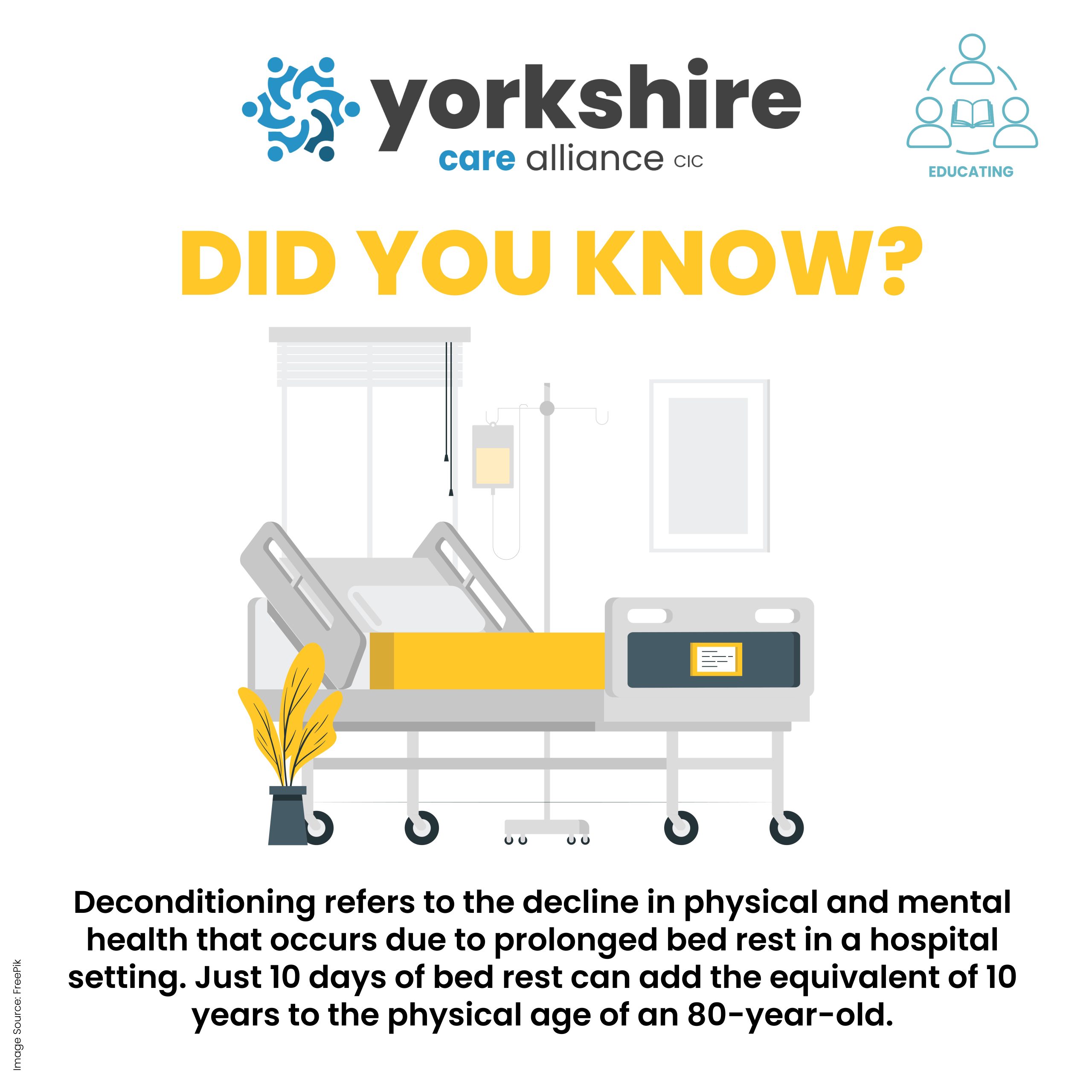
The consequences of hospital bed rest
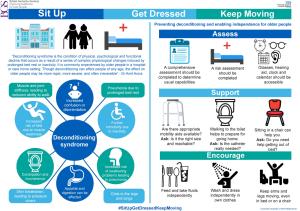
Deconditioning can lead to a range of complications, including:
- Immobility due to inactivity, muscle stiffness, and joint issues
- Increased risk of falls caused by muscle weakness
- Constipation and incontinence, even in otherwise healthy individuals
- Loss of appetite and digestive issues
- Pressure ulcers from prolonged immobility
- Depression and low motivation
- Swallowing difficulties, which can increase the risk of pneumonia
- Pneumonia linked to prolonged bed rest
- Confusion and disorientation
Aging naturally leads to muscle loss (around 3.5% per decade starting at age 40, increasing to 10% per decade between 60 and 70) so although deconditioning can affect anyone, its impact is significantly greater in older adults.
Figures regarding deconditioning:
- Up to 50% of older adults may develop incontinence within 48 hours of admission.
- Within seven days, patients can lose up to 10% of their muscle strength, experience a 25% reduction in circulation, and suffer declines in dignity, confidence, independence, and quality of life.
- 50% of patients experience a decline in their ability to perform daily activities due to physical or cognitive deterioration during hospitalisation and only 39% recover within a year.
Deconditioning often leads to longer hospital stays and, for previously independent individuals, can result in reliance on social services and caregivers after discharge, increasing long-term care costs. Reconditioning, the process of rebuilding strength and function, can take twice as long as deconditioning. So, although bed rest is sometimes necessary during illness, hospitals have been trying to incorporate more exercise, better nutrition, and mental stimulation, in order to prevent the negative effects of inactivity.
However, the fitter and healthier a person is before going into hospital the quicker they are likely to recover. So, this is what it is advised people work on, when waiting for an operation (as waiting lists can be long).
(British Geriatrics Society, ADASS, NHS England, The Times)